


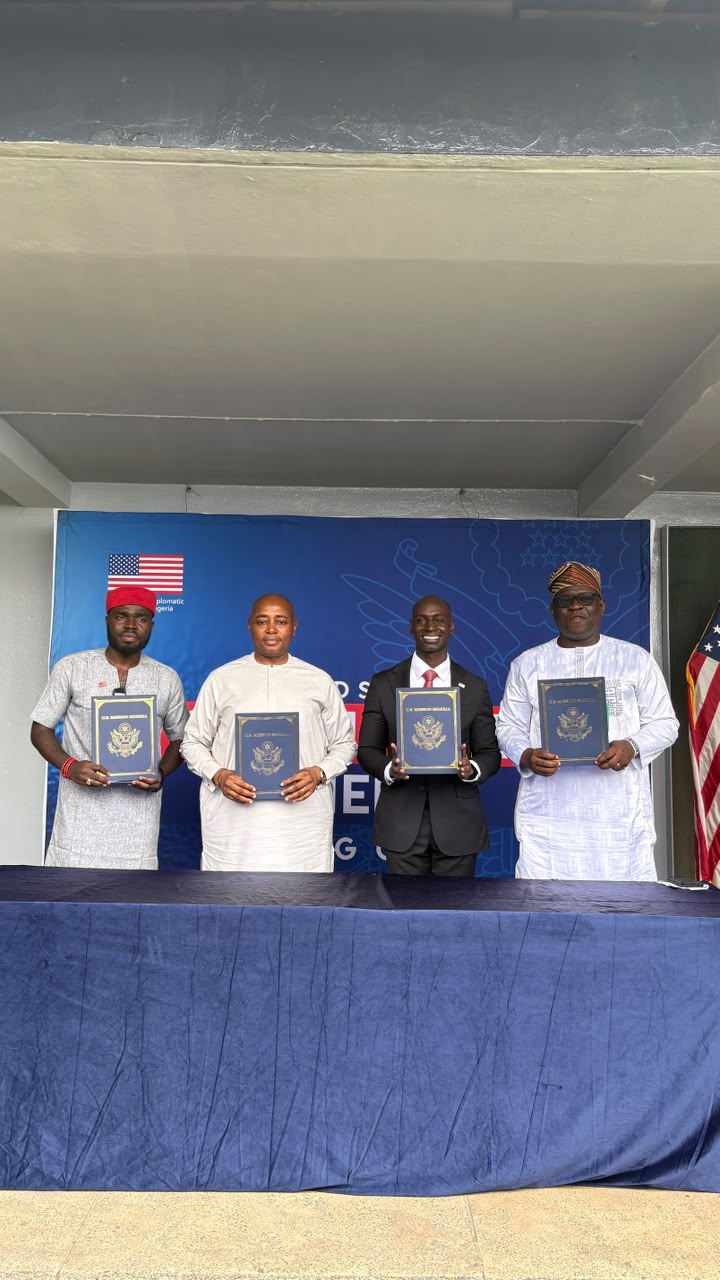

U.S. supports Lejja iron-smelting site with 125,000 dollars grant
ACETNews
The United States Consul-General in Lagos, Brandon Hudspeth has launched a $125,000 Ambassador’s Fund for Cultural Preservation (AFCP) grant in support of the conservation, digital documentation and physical preservation of the historic Lejja Iron-Smelting Site in Enugu State, one of the earliest known iron-smelting sites in sub-Saharan Africa.
The project, titled “Nchekwaba: Conservation, Digital Documentation, and Physical Preservation of the Lejja Iron-Smelting Site,” is being implemented by the Centre for Memories, Enugu, in partnership with cultural heritage stakeholders in Nigeria and the United States.
Speaking at the launch held recently at the National Museum, Onikan, Lagos, Hudspeth described the grant as a significant investment in preserving Nigeria’s cultural heritage while strengthening collaboration between American and Nigerian institutions.
Hudspeth noted that archaeological research has dated the Lejja Iron-Smelting Site to approximately 2000 BCE, making it one of the oldest known centres of iron production in the world.
“My history books taught me that metallurgy started in present-day Turkey, but research carried out by archaeologists from the University of Nigeria and Oxford University has shown that iron production in Lejja dates back about 4,000 years,” he said.
He explained that the project would combine conservation and digital documentation techniques to preserve the site against environmental degradation and other threats.
“This grant of $125,000 awarded to the Centre for Memories will carry out digital documentation of the Lejja site and build on the long history of collaboration between the United States and Nigeria. This is not aid; it is a strategic economic intervention that advances the interests of both nations and the global community,” he said.
The Consul-General revealed that the United States has invested more than $1.2 million in cultural heritage projects in Nigeria through the Ambassador’s Fund for Cultural Preservation over the past five years.
The Executive Director of the Centre for Memories, Mr. Iheanyi Igboko, said the project seeks to preserve both the physical landscape and living traditions associated with the Lejja community.
According to him, Lejja is regarded as one of Nigeria’s most extensively studied archaeological sites and provides some of the strongest evidence of early iron production on the African continent.
“For those who do not know, Lejja is arguably the most extensively studied archaeological site in Nigeria. Archaeology is only one part of the story because the site is deeply connected to the religious, cultural, and political life of the people,” he said.
Igboko explained that the project would focus on conserving the archaeological landscape, documenting indigenous oral history, building community capacity, and promoting tourism development.
“We want to protect both the physical and living knowledge that surrounds Lejja. Through this project, we will conserve the archaeological landscape, record indigenous oral histories, build community capacity, and create new ways for people to learn about the story of Lejja,” he said.
He added that the initiative would empower young people in the community with skills in heritage management, conservation, and tour guiding to ensure long-term sustainability.
“Beyond the money, it is about capacity development. We want to embed skills within the community so that people can continue to benefit from the site for generations,” he stated.
President International Council on Monuments and Sites (ICOMOS) Nigeria, Dr. Oluwatoyin Sogbesan, said the organisation would provide professional conservation expertise throughout the project.
“We are coming in to assess the site and determine the areas that need conservation. We will work with the indigenous knowledge system and the community to ensure that their heritage is preserved properly,” she said.
According to her, the project will involve extensive collaboration with local residents over its implementation period.
Deputy Governor of Enugu State, Ifeanyi Ossai, who represented Governor Peter Mbah, described the project as an opportunity to reconnect people with their history while promoting tourism and economic development.
“Today’s event is important because we are not only preserving the past; we are re-energising the present with the work of the past. The Lejja site speaks to who our people are, our science, our innovation, and our ability to solve challenges,” he said.
Ossai disclosed that the Enugu State Government plans to send an Executive Bill to the State House of Assembly to legally protect the site and eventually seek its designation as a national monument and UNESCO World Heritage Site.
“We are committed to protecting Lejja by law, preserving it for future generations, and working towards securing national and international recognition for the site,” he said.
Representing the Federal Ministry of Art, Culture, Tourism, and the Creative Economy, Dr. Gerald Eze conveyed the goodwill message of the Minister, Hannatu Musa Musawa, describing the Lejja site as evidence of Nigeria’s ancient technological ingenuity.
“The Lejja Iron-Smelting Site is not just an archaeological marvel; it is an undeniable testament to ancient Nigeria’s sophistication, technological ingenuity, and scientific mastery. It reminds the world that Africa, and indeed Nigeria, has long been a cradle of innovation and industry,” he said.
Eze commended the Centre for Memories for securing the grant and applauded the U.S. Mission in Nigeria for supporting the preservation of the country’s cultural heritage.
The event also featured presentations on the Cultural Heritage Forward Programme, a U.S.-Nigeria cultural exchange initiative implemented in partnership with the Smithsonian National Museum of African Art, highlighting its contributions to heritage preservation and professional development in Nigeria.
Stakeholders at the event emphasised that preserving the Lejja Iron-Smelting Site would not only safeguard an important chapter of African history but also create opportunities for research, education, tourism, and community development.