


ACETNews
Before the late legendary Cameroonian-Nigerian highlife musician and songwriter, Prince Nico Mbarga became the celebrated voice behind Sweet Mother, he was, to Paulina Esame Mbarga, simply a persistent young man who would not stop coming to her house.
Prince Nico Mbarga was globally celebrated for his 1976 hit song, Sweet Mother, which sold more than 13 million copies and stands as the best-selling single in history by an African recording artist.
It was 1979. Paulina had just left school and had her mind set on further education. Marriage, especially to a musician, was nowhere in her plans. But the young Mbarga kept appearing at the family home, day after day, patiently seeking her attention.
“I was refusing. I didn’t want it at that period because I just left school. My mates were talking of going to higher institutions. Why should I go and marry?” she recalled.
Her resistance eventually became a matter of family curiosity. One day, her mother asked about the young man who kept visiting. Paulina explained that he was a musician from Cameroon whose mother was from Obubra.
Still, she was unconvinced.
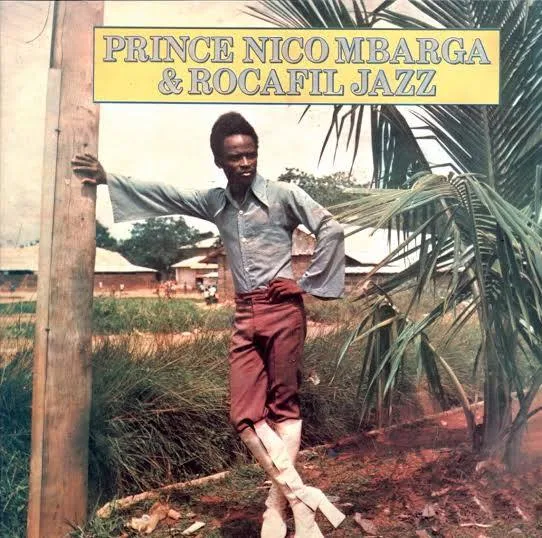
“He was just slim, very tiny, like this. I would see his pictures on his album, with long shoes, long boots. I said, ‘No, my school is not with musician, no.’”
But Mbarga kept coming.
“He was coming and coming and coming. At the long run, I fell in. That’s how we started.”
The relationship soon moved beyond courtship. Mbarga went to meet her family and the traditional marriage rites followed. What began as an unexpected romance gradually became a partnership that would take Paulina into the world of music, travel and international performances.
With no child yet to occupy her at home, she travelled with her husband around Nigeria. Onitsha, Akure and other destinations became familiar stops as Mbarga moved with his music.
Then came Britain in 1982.
For Paulina, the journey was an adventure into a world she had previously known only through her husband’s music. They were received at the airport and taken to a hotel before Mbarga proceeded with preparations for his performance. Because he had not travelled with his entire band, he arranged rehearsals with musicians in Britain.
From Britain, the couple travelled to France, where Mbarga took her to SACEM and showed her how royalties were administered for musicians.
“He took me around and showed me what they are doing,” she recalled.
But nothing perhaps demonstrated the scale of Mbarga’s fame to Paulina more vividly than a performance in Cameroon. The crowd was so large that getting to the stage became almost impossible. Fans struggled to touch their idol, with some pulling at his clothes and others seeking his signature.
For the woman who had once resisted marrying a musician, life had taken an extraordinary turn.
Yet behind the applause and international engagements was a private life also marked by difficult moments.
In 1997, Mbarga was preparing for an American tour and had travelled to Calabar to process documents for the trip. Paulina remembers a series of incidents that, in retrospect, unsettled her.
While driving, the bonnet of his car suddenly opened. He stopped, closed it and continued his journey. The following day, his car engine was damaged at Odukpani.
She was later informed that her husband’s car had developed the problem.
Mbarga returned and subsequently travelled again to Calabar to complete his passport arrangements. After being dropped at the passport office, he instructed his driver to wait at the park because he could not tell how long the process would take.
On his way back to meet the driver, disaster struck.
“He was on top of a bike. They knocked him down and he fell,” Paulina recalled.
A Cross Line bus had hit him on the main avenue. He was taken to the General Hospital, where he spent about two weeks.
When the news reached Paulina, she rushed to the hospital.
The accident brought a sudden interruption to the rhythm of a life that had been built around music, travel and family. There were hospital bills, financial pressures and the anxiety of watching a husband whose life had become intertwined with a musical legacy much larger than himself.
For Paulina, however, the memories are not simply those of a famous musician. They are memories of the young man who kept returning after she had repeatedly turned him away; the husband who carried her around Nigeria; the companion with whom she crossed continents; and the celebrated performer whose fame sometimes made it difficult for him even to reach his own stage.
Her recollections peel away the public image of Prince Nico Mbarga and reveal the more intimate story of the man behind the legend — remembered not first as a star, but as the persistent young musician who eventually won the heart of the girl who had once insisted that her future was not with a musician.