


ACETNEWS
When a patient is waiting for a diagnosis, every minute matters and the difference between life and death can sometimes depend on how quickly a disease is detected and how accurately it is diagnosed. For patients awaiting medical investigations, every hour can heighten anxiety, while delays in identifying a condition may affect treatment outcomes.
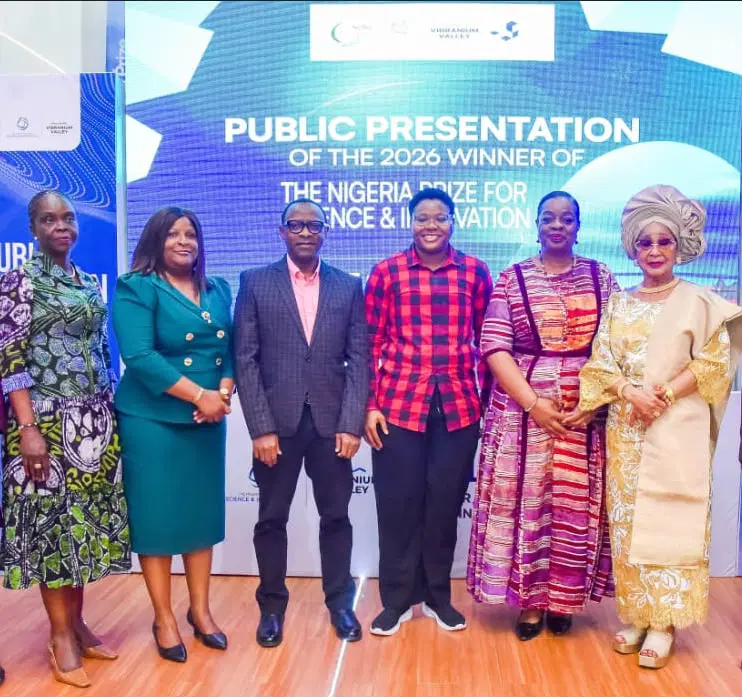
This reality formed the backdrop of the public presentation of GenScan AI, the winning innovation of the 2026 Nigeria Prize for Science and Innovation, developed by Mary-Brenda Akoda, in Lagos.
For Mary-Brenda Akoda, the challenge of reducing that waiting time has become a mission to harness artificial intelligence (AI) to accelerate medical imaging, ease pressure on hospitals and potentially save lives.
Akoda, winner of the Nigerian Prize for Science and Innovation, (NPSI) believes technology can help tackle delays in diagnosis, particularly in healthcare systems struggling with a shortage of radiologists and growing patient backlogs.
Speaking at the public presentation of the prize organised by Nigeria LNG Limited (NLNG) in Lagos, she explained how her innovation uses AI to speed up the reconstruction of medical images while seeking to preserve the quality required for accurate diagnosis.
She likened the process to assembling a puzzle with thousands of pieces. Rather than requiring every piece, her technology uses AI to work with fewer pieces of information while reconstructing an image that retains its diagnostic value.
The approach, she said, could reduce imaging times from 20 minutes to two minutes in some cases, and from an hour to six minutes in others, potentially allowing hospitals to serve more patients within shorter periods.
For a country where access to timely diagnostic services remains a major healthcare concern, such advances could offer an important opportunity to improve efficiency. However, their clinical value will depend on validation, diagnostic accuracy and safe integration into medical practice.
Akoda stressed that the goal was not to replace radiologists but to support clinical interpretation and help address gaps in diagnostic services. Apart from science, the award winner offered a message to young Nigerians who may hesitate to pursue ambitious ideas because they fear failure or doubt their abilities.
“You get zero per cent of the opportunity that you don’t chase,” she said, urging young people to pursue opportunities rather than disqualify themselves before making an attempt.
She described the research journey as the most challenging process she had undertaken, acknowledging the encouragement of family and friends during difficult moments.
According to her, overcoming imposter syndrome—the feeling of being inadequate despite one’s abilities or achievements—begins with the willingness to act despite uncertainty.
She said two questions guide her decisions: whether an undertaking can deliver large-scale impact and whether it presents a worthwhile challenge. When both conditions are met, she is prepared to take the risk.
The significance of winning the Nigerian prize, she added, went beyond personal achievement. Recognition from her home country was particularly meaningful, while her emergence as the first Gen Z winner offered a powerful message to younger Nigerians about the possibilities open to them.
Recalling the moment she learnt of her victory, Akoda said she immediately sent a message to her mother, whose congratulatory response made the achievement even more memorable.
Ultimately, her ambition extends beyond developing a promising technology or receiving scientific recognition. It is about shortening the distance between a patient seeking medical attention and the diagnosis that could determine the next course of treatment.
In a healthcare system where delays can carry serious consequences, that ambition gives her work significance beyond the laboratory.
In her remark, General Manager External Relation, Nigeria NLG, Dr Sophia Horsfall stressed the importance of technological advancement in healthcare, noting that artificial intelligence was expanding the frontiers of medical diagnosis and treatment. Drawing from her experience, Horsfall said timely and accurate diagnosis remained critical to improving patient outcomes and saving lives.
She explained that medical imaging, particularly magnetic resonance imaging (MRI), played an important role in helping doctors identify conditions within the human body. However, the time required to conduct MRI examinations could delay diagnosis and the commencement of treatment.
According to her, innovations capable of making medical investigations faster and more efficient deserve attention, particularly in Nigeria, where healthcare demands continue to place pressure on available resources.
GenScan AI applies advanced computing techniques to MRI to improve the efficiency of image acquisition and support medical professionals in making more informed diagnoses.
Horsfall noted that the innovation was recognised for its potential to reduce MRI acquisition time, improve image quality without requiring additional hardware and better accommodate challenges associated with patient movement.
She observed that remaining completely still during medical investigations could be difficult for patients, especially in unfamiliar hospital environments. Technologies that help address such challenges could therefore contribute to more effective medical examinations.
The innovation emerged as the winning entry following the evaluation of more than 230 submissions received for the 2026 prize, which challenged scientists in Nigeria and the diaspora to develop solutions using artificial intelligence, information and communications technology, and digital technologies for development.
According to Horsfall, the significance of the public presentation extended beyond celebrating the winning entry. She described the gathering as an opportunity to move the innovation from the judging process into wider professional, academic and public discussions.
She also encouraged medical practitioners, researchers, students and innovators at the event to examine the scientific foundations of GenScan AI, interrogate its practical applications and consider how it could improve healthcare delivery in Nigeria and beyond.
The presentation, she said, reflected the purpose of the Nigeria Prize for Science and Innovation, established in 2004 to recognise scientific excellence and encourage innovations capable of addressing the country’s developmental challenges.
Ultimately, the promise of GenScan AI lies in its potential contribution to a healthcare system where accurate diagnosis is not only possible but also more efficient and accessible.
As Nigeria continues to explore the application of emerging technologies to critical sectors, innovations such as GenScan AI raise an important question: how can scientific discoveries be translated into practical solutions that improve patient care and save lives?