

ACETNews
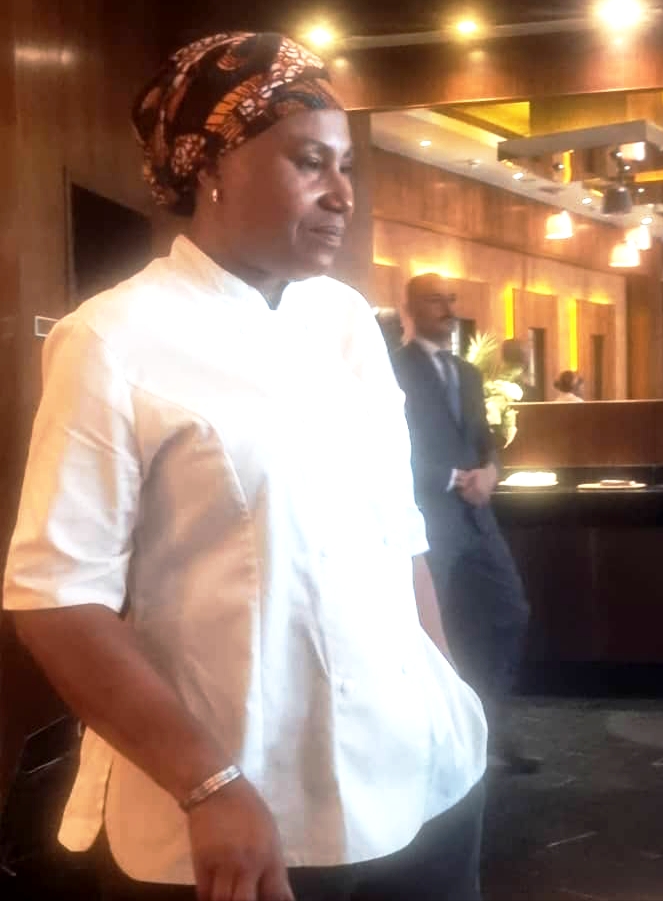
London-based Michelin-starred Nigerian Chef Adejoke Bakare is currently in Lagos for a four-day residency at the Lagos Continental Hotel, Lagos holding in in November. She speaks on her experiences in London, why over 80 percent of her customers were non-Nigerians, the residency featuring eight chefs under the age of 30, her desire to take Nigerian food to same level of recognition that Nigerian art and fashion have achieved among others.
Excerpt:
What is the place of Nigerian cuisine on global scene?
I think Nigerian cuisine has a place in the world without trying to be French, Japanese, or Chinese. There is so much flavour and so much depth attached to our food. We do not just eat for sustenance. There are cultural and even spiritual meanings attached to certain foods. There are foods eaten only at specific times or seasons. I think we should celebrate that.
In my restaurant, we do not use a lot of meat. We use goat meat when appropriate. When people ask what certain ingredients are, I tell them that if they know miso or fish sauce, this is our own version of those things. We should celebrate what we have.
Having the Michelin star, which we never expected, has brought more international guests who want to discover Nigerian and West African food and understand its place in our culture. I think it is something we should continue to explore.
At the inception, how embracing was the West to this variation of Nigerian cuisine?
You would be surprised. I opened during the pandemic, and people came very quickly. The restaurant was in a place where people were open-minded. They came, loved it, and told their friends.
London is such an embracing place for food. There is practically no cuisine in the world that you cannot find there in its most authentic form. Nigerians in London already know food. People knew about jollof rice and puff-puff, but not necessarily the broader picture. They would come into the restaurant and ask questions. Many were open-minded and would even say, “I really need to visit Nigeria.”
I would tell them, “Wait a little before you go. It is not ready yet, but it will be.” Because of the food they were eating, many became interested in visiting Nigeria.
Would you say you showcase a Nigerian cultural experience at your restaurant in London?
In terms of food, yes. That is exactly what it is. We do not try to be what we are not. We have to be contemporary because of where we are, but when people come in, we tell them this is who we are. Many people are open to it.
You would be surprised that about 85% of our guests are non-Nigerians or non-West Africans.
What is the meaning behind the name Chishuru?
There are two things. First, there is a bean called achishu, which I loved growing up. Secondly, there is a saying that when you like something too much, you are “doing senti.” Chishuru is a combination of those ideas.
The more poetic explanation is that it represents the silence that descends when food arrives.
Most people do not easily associate silence with Nigeria. I grew up in a wonderful Nigeria. On my street, we had people from all over West Africa—Ghanaians, people from other countries, and Nigerians all living together. Everyone mixed, everyone learned from one another. I think it is sad that we are losing that Nigeria.
This residency lasts four days. What does it mean to you?
It means coming home. It is a homecoming. One thing we have in this country is young people bringing new ideas. I realised that you cannot become what you cannot see. There is no need to always look to the West. We should look inward at our own food and explore it.
It is amazing to see people trying to discover and learn more. We do not write many of these things down; much of it is oral tradition, and we are losing that. For me, coming home is about showing younger people that there is so much to learn. Find an older person, learn a recipe, and then make it contemporary. Celebrate what we have.
That is what I am trying to do.
What can people experience here that they may not get at your restaurant in London?
Everything here is sourced locally. We are talking to suppliers from across the country. The person who supplied the atili oil is from Jos. We are trying as much as possible not to use anything imported.
In London, for example, instead of using cocoyam for ebiripo, we use celeriac because cocoyam is difficult to find. So, in London we are doing Nigerian food with a London accent. Here, we can truly be ourselves using all the produce available to us.
Who is the target audience?
Food lovers especially. We are also creating opportunities for young chefs. We are inviting eight chefs under the age of 30 to come and eat for free so they can see what we are doing and hopefully be inspired.
What does authenticity mean to you when presenting Nigerian cuisine to an international audience?
Authenticity means telling our own story in an authentic way. We do not want others telling our story for us because when they do, it becomes their version of our identity. I have lived in the West and learned different techniques. As a chef, I am always learning. But at the core of what I do are our flavours and our traditions.
You have achieved international recognition as a chef. What does that mean for Nigeria, Nigerian cuisine, and African chefs seeking visibility?
One thing I see is that we have always been told that what we have is not enough, that we need validation from elsewhere. We do not need to make a moi-moi pizza. Pizza comes from a particular culture. We have our own traditions. We have flat breads and many other foods across Nigeria. We already have everything we need. We just need to open our minds.
The youth in this country are vibrant, and if they see what is possible, they will create incredible things.
I also want food to gain the same level of recognition that Nigerian art and fashion have achieved. When people hear Art X, they think of Lagos. When they hear Lagos Fashion Week, they think of Lagos. Why can’t we have a major food festival that attracts visitors from around the world and brings economic value to the country?
Are you preserving culinary heritage or reinventing it?
Chishuru in London cannot fully preserve it because it must work with the ingredients available there. As an immigrant, you find ways to recreate the food you grew up eating using what is available.
When I first moved to London about 30 years ago, we did not have Agege Bread. We used Jamaican bread as an alternative. Now, you can find Agege Bread everywhere. What I am trying to say is that Chishuru in London is different because of its environment.
My hope for Nigerian cuisine is that it gains more respect globally, that more people train in it, and that more chefs take it further. That is why, in my restaurants, I have always pushed beyond just jollof rice. We have rice with okra, mixed rice, coconut rice, and many other dishes. I do not want Nigerian food to become reductive and be defined only by jollof rice. Our cuisine is far more diverse than that.
This dish is our own interpretation of pepper soup. We try to embrace sustainability. In fine dining, there can be a lot of waste, but I grew up in a culture where everything is used. I teach my chefs to use every part of an ingredient. When we prepare potatoes, for example, we use the leaves as well. With fish, we use the head and bones to make stock and use the flesh in different ways.