

FG to turn Nigeria’s festive economy into 100billion dollar growth engine
*As MyCityApp launches 100-Day tourism calendar
ACETNews
The Federal Government is seeking to turn Nigeria’s annual festive-season boom into a structured economic engine as it moves to unlock an estimated $100 billion opportunity in tourism and the creative economy and deepen the sector’s contribution to national development.
The Minister of Arts, Culture and the Creative Economy, Hannatu Musawa, said yesterday that the September-to-December period, which sees increased travel, entertainment, hospitality and consumer spending across the country, could become a powerful driver of jobs, investment and local economic growth if deliberately organised and commercialised.
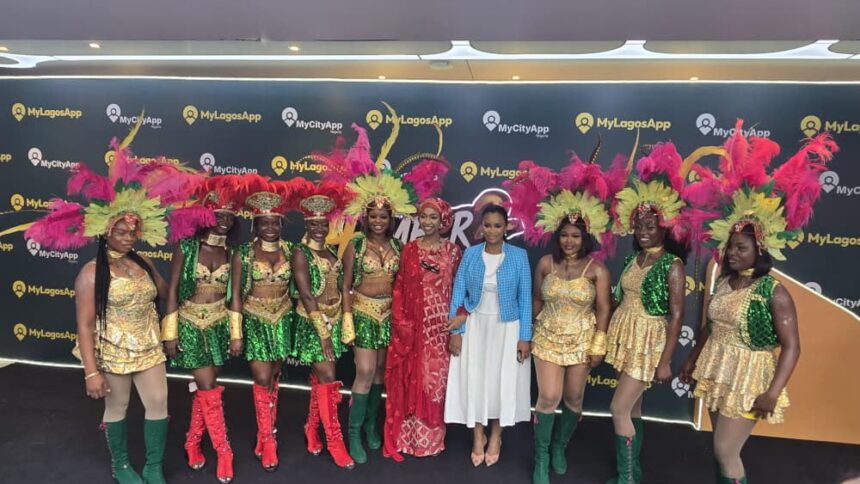
Musawa spoke at the Ember to Remember National Stakeholders’ Conference and the launch of Nigeria’s coordinated September -to-December 100-Day calendar at Eko Hotel, Lagos, on Monday. It was held in partnership with federal Ministry of Arts, Culture, Tourism and Creative Economy and MyCity App.
She called for stronger collaboration between government and businesses to transform Nigeria’s cultural and creative assets into sustainable economic value.
She identified music, fashion, cuisine, festivals, heritage, hospitality and Nigeria’s creative talent as assets capable of attracting domestic and international visitors and generating economic activity across multiple sectors.
At the heart of the initiative is the National Ember to Remember Calendar, which the minister said should bring together major festivals, concerts, exhibitions, cultural events, food experiences, sporting activities and tourism attractions nationwide.
She urged state governments, event organisers, hotels, tour operators, cultural institutions and private businesses to populate the calendar, creating a central platform through which Nigerians, members of the diaspora and international visitors can discover experiences across the country.
“The tourism, cultural and creative economy is one of those sectors with the capacity to deliver precisely this kind of broad-based growth. Our responsibility is therefore to move from seeing tourism and creativity simply as entertainment to recognising them as serious economic sectors capable of attracting investment, generating employment, supporting businesses and contributing significantly to Nigeria’s GDP.
“This is why the Ministry will continue to work with state governments, investors, creative entrepreneurs, technology platforms, hospitality businesses and other stakeholders to build the ecosystem required to unlock this opportunity,” she added.
According to Musawa, the economic impact extends far beyond entertainment. Increased visitor traffic generates demand for airlines, transport operators, hotels, restaurants, retailers, technology companies, artisans and community businesses.
She said government would focus on creating the enabling environment through policy, infrastructure, security, destination development and ease of movement, while the private sector must drive investment and innovation.
The minister also commended MyCityApp Chief Executive Officer, Mrs Ifeoma Chukwu, for championing the initiative and described the partnership as an example of how private-sector innovation could advance national economic objectives.
Musawa said the broader ambition was to move Nigeria from a seasonal celebration economy to a year-round tourism and creative economy, capable of creating opportunities for young Nigerians, strengthening businesses and attracting investment.
She stressed that the $100 billion opportunity could not be delivered by government alone, but required a coordinated national ecosystem involving the public sector, private businesses, communities and creatives.
“Opportunities do not become economies by accident. They require deliberate planning, collaboration, investment and execution,” she added.
CEO, MyCityApp, Ifeoma Chukwu said that Nigeria is building a $100billion tourism economy might sound ambitious, but the evidence tells it is achievable, recalling that in 2024, tourism contributed over $270 billion to Spain’s economy, about $289 billion to France and more than $2.5 trillion to the economy of the United States.
“So, the question is not whether a $100 billion tourism economy is possible. It is: why not Nigeria?
Nigeria is rich in culture with one of the most vibrant creative industries in the world. The opportunity is to turn every visitor’s experience into economic value.
“Somewhere overseas, there is a Nigerian, or someone who simply loves Nigeria, asking: “What is happening in Nigeria between September and December?” Today, that information is fragmented.
“Events are all over the social media, another festival may have existed for 50 years, yet someone outside that community has never heard about it. That is the gap we want to close. That is why we created Ember2Remember,” she added.
Chukwu stressed that at the centre of it is MyCityApp and MyLagosApp, the digital engine for the National Digital Calendar that brings events and experiences across Nigeria into one place and pushing them through a 360 degree media ecosystem to Nigerians at home and in the diaspora.
“There was a season to plant. And there was a season to harvest. Nigeria has planted culture for generations. We have planted music. We have planted fashion. We have planted food. We have planted festivals, creativity and stories the world is already beginning to fall in love with. Now, it is time to harvest. Revenue and prosperity,” she said.