


*Doreen Igbinoba is Curator
ACETNEWS
The contributions of women to Benin’s artistic heritage will take centre stage at this year’s Benin Art Fair as organisers dedicate the event to the life and legacy of the late Princess Elizabeth Olowu (Nee Akenzua), whose artistic pursuits challenged the boundaries of her time.
The fair, with the theme, Art in the Ancient City seeks to promote, preserve and document Benin’s rich cultural heritage while drawing attention to historical figures whose contributions deserve greater recognition.
According to the convener, Chief Jeff Ajueshi, the decision to honour Princess Akenzua reflects the need to preserve important chapters of Benin’s artistic history and ensure that future generations understand the individuals and experiences that have shaped its cultural identity.
Ajueshi said Princess Akenzua’s artistic journey and connection to the history of bronze casting in Benin provide an opportunity to examine the role women have played in sustaining and redefining artistic traditions, often in the face of considerable challenges.
He noted that cultural history should not be viewed exclusively through the contributions of men, stressing that women have also played significant roles in advancing artistic practices and preserving cultural memory.
By dedicating the 2026 edition to Princess Akenzuwa, the organisers hope to bring renewed attention to her courage, convictions and artistic ambitions, while encouraging wider conversations about women’s place in art history.
The fair will also explore the relationship between art, identity, tradition and cultural diplomacy, reinforcing the importance of documenting artistic heritage as a means of connecting communities and generations.
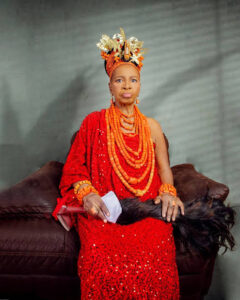
As a child, Princess Akenzua worked alongside her mother, learning to sculpt items related to palace life and ritualistic needs. Her father encouraged her education and interest in sculpture despite local superstitions discouraging women from entering bronze foundries. She attended Holy Child College, Lagos, where she developed a love for reading. She continued her education at the Federal Emergency Science School where she majored in botany, chemistry, and zoology, which she later taught at the Anglican Girls’ Grammar school, Benin City.
At age 18 she married her high school friend, Babatunde Olowu, and had her first child, Adedapo Tunde-Olowu in 1965. In 1966 she continued her education by enrolling at the University of Nigeria, however she had to abandon her studies when the Nigerian Civil War broke out in 1967. She continued teaching once home and regularly organized art shows for her female students, which eventually attracted the attention of the director of University of Benin’s Creative Arts department, who invited her to join the Fine Arts program. In 1979 she graduated with a Bachelor of Fine Arts, and by the year 1981 she had begun to work on her post-graduate study, which included her thesis on “An Investigation into Benin Cire Perdue Casting Technique.” This accomplishment made her the university’s first female recipient of a Master of Fine Arts and the first Nigerian woman to cast bronze.
In 1985 she received the Bendel State Award for Art and Culture and was later recognized by the Young Women’s Catholic Association for her contribution to uplifting the status of women in her country. She now continues to work at the University of Benin, where she takes care of her own bronze foundry.
As a female artist, Princess Akenzua’s main desire is to “liberate womenfolk from the shackles of men, deprivation and taboos”.In 1979 she sculpted an autobiographical sculpture of a young girl sitting at a desk while engrossed in a book. This sculpture was one of the first from her culture that depicted an individual female figure. The year 1983 was also an important year of her life. She explored, in depth, the themes of power from an emotionally diverse perspective.
As part of preparations for the event, the organisers announced Doreen Eloghosa Igbinoba, an art historian, as curator of the 2026 edition. Igbinoba is expected to shape the intellectual and curatorial direction of the fair, providing historical context for Princess Akenzuwa’s life and legacy while examining the broader significance of her artistic journey.
The organisers expressed confidence that her expertise would enrich the presentation and interpretation of the story, particularly in highlighting the intersections of art, history, identity and collective memory.
Beyond its exhibition component, the Benin Art Fair is conceived as a platform for historical reflection, contemporary artistic expression and engagement among artists, historians, collectors, cultural institutions and the public.
Through the initiative, the organisers aim to strengthen appreciation of Benin’s artistic traditions and connect its cultural heritage with wider national and international audiences.
For Ajueshi, preserving such histories is both a cultural responsibility and an investment in the future, ensuring that the stories of pioneering figures remain accessible and relevant to younger generations.
The 2026 edition is expected to use the power of art and historical documentation to celebrate Benin’s cultural identity, recognise overlooked contributions and encourage fresh perspectives on the people whose lives have helped shape its artistic legacy.