



ACETNews
UK Bradford’s cultural landscape recently provided an important platform for African creative expression when the Bradford African Festival of Arts (BAFA) 2026 brought together artists, performers and cultural practitioners for a celebration of African creativity and contemporary cultural exchange. The festival, which ran from 3 to 8 August 2026, presented work across music, theatre, visual arts, fashion, storytelling and other forms of creative practice.
Among the theatrical offerings was ‘The Crown’, an immersive theatre production written and directed by Daniel Okezue and produced by Prolific Arts.
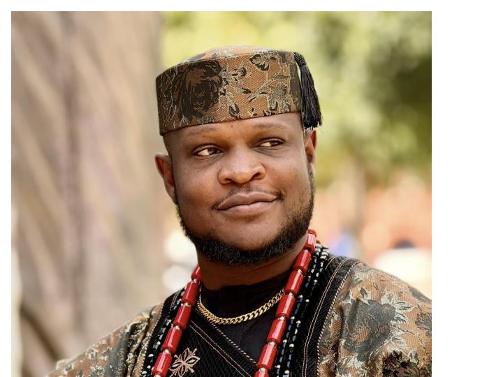
At the centre of the production stood Debola Akran, who played the King. His was a role that demanded more than the external appearance of royalty. The King arrives at the market square amid rumours of increased taxes and levies imposed on market sellers. His stated purpose is to reassure his subjects of his commitment to their welfare, but beneath the royal encounter lies a more complicated question about leadership, trust and the responsibility that accompanies power. Akran understood the contradiction at the heart of the character.
The King possesses authority, but he must also demonstrate that authority is being exercised for the benefit of the people.
The most interesting feature of Akran’s performance is the way he handles the King’s relationship with the community. In conventional theatre, a monarch can be elevated physically and dramatically above other characters. The Crown, however, is immersive. The King enters the same social environment occupied by the market sellers and the audience. That proximity changes the performance.
Akran cannot rely solely on regal posture or costume to establish authority. He must make the audience believe that this man has the political and personal presence to command respect while remaining sufficiently accessible to address the concerns of ordinary citizens. He achieves this through controlled physicality and measured delivery.
His King is authoritative without becoming a theatrical caricature. There is ceremony in his presence, but there is also an awareness that his power is being tested by the people standing before him. That tension gives the character depth.
Speaking about his approach to the character, Akran reflected on the responsibility attached to playing the King.
“For me, the king had to be a leader who was conscious that his people were worried. The crown gives him authority, but it also gives him responsibility.”
That interpretation is central to the success of the role. The King is not simply the most important person in the fictional world. He is also the person most accountable for its condition.
This becomes particularly effective when Akran shares the space with the market sellers, played by Irene Agbo, Adeyinka ‘SuperGirl’ Akinremi and Issifu Dde Amponsah. Their concerns give the King’s reassurance something against which it can be measured.
Akran’s strongest moments are those in which he resists overstatement. The temptation in playing royalty is to make every gesture significant. But Akran allows the character’s authority to emerge gradually through interaction. The King does not need to constantly remind the audience that he is King; the environment already knows.
This restraint is particularly useful in immersive theatre, where exaggerated performance can quickly break the illusion of reality. Akran instead creates a character who appears to believe in the responsibility of his position, even as the circumstances around him suggest that the relationship between ruler and subjects is becoming strained. It is this balance between command and vulnerability that makes his performance compelling.
Okezue’s writing gives Akran an intriguing dramatic metaphor. The crown represents power, but it also represents responsibility. Akran’s performance brings that contradiction into focus.
“The interesting thing about the character is that the crown is both a privilege and a burden,” Akran explained. “People see the power, but they don’t always see the responsibility that comes with it. I wanted the audience to feel that the King was carrying both.”
The line of thought fits naturally into the production’s wider exploration of governance. The market sellers are concerned with livelihood. The chiefs represent structures of authority. The town criers and chanters communicate the affairs of the community. The talking drummer supplies the rhythmic voice of the culture. And at the centre of this social structure stands Akran as King.
One of the production’s strengths is its refusal to treat African cultural elements as decoration. The marketplace, the chiefs, the town crier, chanting and talking drum all function within the dramatic structure. They establish a performance vocabulary that draws from African communal traditions while using the possibilities of contemporary immersive theatre. This approach is consistent with BAFA’s wider objective of celebrating African culture while creating space for contemporary artistic expression and cultural exchange.
Akran as King consequently becomes more than a fictional monarch. He is part of a theatrical exploration of how traditional ideas of leadership can be reconsidered within a contemporary diasporic context.
Akran’s performance demonstrates the importance of versatility within contemporary African theatre in Britain. Known also for his music and live performance work, Akran brings an awareness of audience connection to the theatrical role. He does not approach the King simply as an opportunity to display theatrical authority. Instead, he finds the humanity beneath the title.
“For me, the King is ultimately a human being before he is a King,” Akran said. “That was what I wanted to explore, somebody who has power but still has to listen, respond and understand the people around him.”
That interpretation gives the character a contemporary relevance.
Akran’s performance as the King in The Crown is effective because it understands that royalty in theatre is not simply about appearing powerful, It is about making the audience believe in the responsibility of power.
Through controlled physicality, measured delivery and an attentive relationship with the ensemble, Akran gives the King sufficient authority to command the market square while retaining the vulnerability necessary to make the character human.