


ACETNEWS
As Africa’s creative industry expands in the digital age, the challenge for emerging talents is no longer how to create content, but how to connect their work with audiences, access industry opportunities and build sustainable careers.
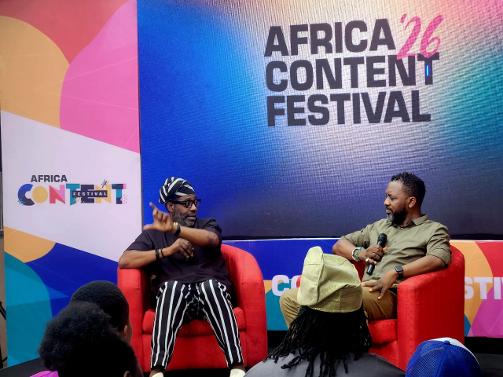
This is the vision behind the Africa Content Festival, which debuted at the weekend in Ikeja, Lagos, to provide a platform for young creatives to learn from established professionals, showcase their talents and explore opportunities in the content economy.
Speaking at the festival, Seun Adeleye said the initiative was designed to bridge the gap between young content creators and the wider creative industry through mentorship, professional training and practical engagement.
According to him, the festival evolved from the organisation’s earlier efforts to train young people in media skills through school programmes and university visits.
Adeleye explained that the experience of working in the industry had taught him the importance of mentorship and access to opportunities, noting that emerging creatives needed more than the ability to produce content to succeed.
“Nobody succeeds entirely on their own. The idea of being self-made is, in many ways, a myth because someone usually has to open a door for you,” he said.
He added that the festival was intended to create such opportunities by connecting young talents with experienced practitioners who could share lessons from their careers, including their successes and failures.
The programme featured master-classes, interviews, film screenings, monologue screenings and head-to-head sessions, alongside discussions on emerging industry issues, including artificial intelligence and content distribution. Among the facilitators at the event included Femi Odugbemi, Kayode Adeniji, Ayodele Elegba, and Charles Nnadozie,
Adeleye said the focus on distribution was particularly important because producing quality content did not automatically guarantee access to audiences or commercial success.
He noted that young creatives needed to understand how to position their work, reach the right markets and develop sustainable business models rather than concentrate solely on immediate financial returns.
According to him, the industry would benefit when young people developed the discipline and consistency required to build lasting careers.
The festival also comes at a time when digital technology is transforming content production and consumption. Adeleye believes artificial intelligence will provide new opportunities for creators to improve and expand their work, although he maintains that human creativity and judgement will remain essential.
He observed that social media had evolved beyond a platform for social interaction into an interest-driven medium where audiences seek content that reflects their preferences.
This shift, he said, presents opportunities for creators who understand their audiences and can deliver relevant material across digital platforms.
Explaining the choice of date, Adeleye said the festival was scheduled during the Ember period to align with the busy season for film, festivals and other creative activities in Lagos.
He expressed confidence that the content industry would continue to grow, with investment in audience engagement and digital distribution creating new possibilities beyond physical events.
For the organisers, however, the festival’s long-term value lies in building an ecosystem in which young creatives can develop their skills, earn from their work and eventually create opportunities for others.
Adeleye explained that the approach involved bringing emerging talents into projects, allowing them to gain practical experience and benefit when the projects generated revenue. Some could subsequently establish independent ventures or become investors themselves.
The process, he said, would help create a cycle of growth in which experience, resources and opportunities circulate among successive generations of creative professionals.
Through its combination of training, industry engagement and creative showcases, the Africa Content Festival seeks to position young African talents not merely as content producers, but as professionals capable of participating in and contributing to the growth of the continent’s creative economy.
Co-Founder and organisers of Africa Content Festival, Adebisi Mr. Adebisi Peters, said the festival was conceived as part of the organisation’s fifth-anniversary celebration to provide emerging creatives with platforms to showcase their work and connect with opportunities in the creative industry.
He explained that although the organisation had trained thousands of aspiring creatives, many struggled to gain visibility and access opportunities to advance their careers. Rather than wait for established platforms to accommodate them, he said, the organisation decided to create an avenue where young people could exhibit their work, connect with industry professionals and explore career opportunities.
Peters said the organisers deliberately selected speakers based on their professional contributions rather than popularity, with the aim of providing practical guidance and helping young creatives understand the demands of the industry. He added that the organisation was seeking partnerships with government agencies and private-sector players to expand the festival and provide more opportunities for emerging talents.
“Our goal is to help creatives gain visibility and access to opportunities,” he said, stressing that the organisation was not established to collect a percentage of the earnings of the talents it supports. The initiative builds on the achievements of Shoot Your Shot Africa, which has trained more than 5,040 young people in media and creative skills. According to Peters, some former trainees now work with television stations, including Silverbird, while others have secured international employment. One former trainee has also joined the board of the National Film and Video Censors Board. The organisation has also received accreditation from the National Board for Technical Education as a recognised vocational training centre, a development Peters described as recognition of its work and the quality of its training programmes. It has additionally been commissioned by the Federal Ministry of Education to train 80 young people in creative media, bringing its projected training reach to more than 5,100. Part from equipping young people with practical skills, Peters said the organisation was committed to instilling professional ethics and standards in its trainees. Its long-term ambition, he added, was to see today’s trainees become industry leaders and mentors within the next decade, creating a cycle in which beneficiaries would equip the next generation.