


ACETNEWS
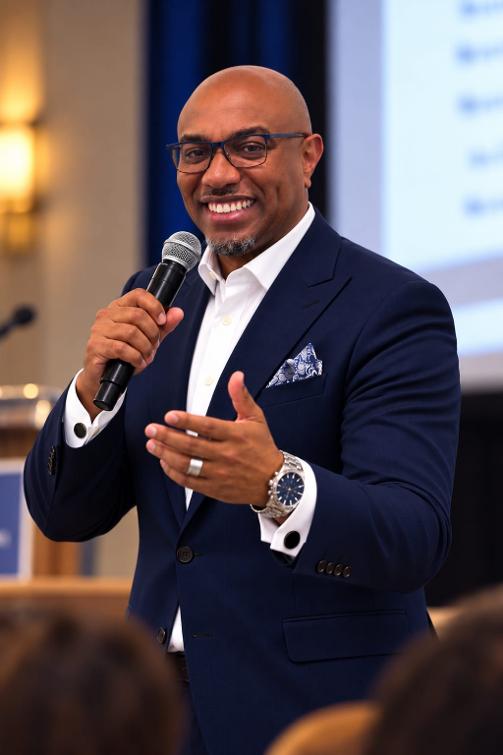
Founder and President of LIFT Global, Dr. Ebere Morgan, the organization behind CIVITAS, has unveiled plans to expand a leadership development and mentorship model to the Niger Delta, with a focus on building a sustainable pipeline of young Nigerians equipped to lead institutions, solve community problems and drive national development.
Morgan said Nigeria must move beyond its traditional approach of associating leadership with political appointments, official positions and individual charisma, noting that the country needs a structured system for identifying, developing and supporting leaders from an early age.
According to him, “CIVITAS is already operational in Nigeria. We formally launched in Agbor on March 21, 2026, with over 700 students from 19 schools in attendance. The broader expansion remains a developing initiative, but implementation has already begun.”
Speaking on his proposed leadership development initiative, Morgan described leadership as the integrated human capacity to actualize desired futures through human systems.
He noted that Nigeria has considerable human resources but lacks the systems needed to consistently transform individual talent into collective capacity, effective institutions and sustainable development outcomes.
“For a long time, we have treated leadership primarily as something residing in an individual,” he said, noting that the ability of a society to produce effective leaders depends significantly on the systems surrounding them.
He argued that just as governments and societies invest in education, healthcare and economic institutions, leadership development should receive similar attention because human capacity ultimately determines the effectiveness of those systems.
Morgan said leadership formation should begin long before individuals assume positions such as commissioners, chief executives, governors, vice-chancellors or directors-general.
He identified identity, responsibility, citizenship, agency, influence, judgment and stewardship as essential elements that should be developed early to prepare young people for leadership responsibilities.
“Nigeria does not simply need more leaders. Nigeria needs a system capable of producing leadership,” he said.
Morgan explained that her Leadership Intelligence concept focuses on the integrated human capacity to actualise desired futures through human systems, stressing that effective leadership involves more than personal ambition or professional achievement.
He said the proposed expansion into the Niger Delta was informed by the region’s enormous human and natural resources, strategic importance and existing development challenges.
Delta State-born Morgan described the region as an important starting point for developing a leadership ecosystem that connects young people, educational institutions, businesses, communities, civil-society organisations and public institutions.
He maintained that the Niger Delta should not be viewed primarily through the lens of its developmental difficulties but as a region with significant potential to demonstrate a new approach to leadership development in Africa.
According to him, existing interventions in youth empowerment, technology, vocational skills, entrepreneurship and education provide opportunities for leadership development to complement ongoing initiatives rather than duplicate them.
He said equipping young people with technical skills was important but insufficient without the capacity to exercise sound judgment, collaborate across differences, mobilise people, build trustworthy institutions and manage resources responsibly.
“Human capital without leadership capacity remains underleveraged capital,” he said.
Morgan added that the region could become a testing ground for an approach that combines individual development with institutional strengthening and community participation.
On how the initiative would address the Niger Delta’s governance, youth engagement and institutional capacity challenges, he said its central objective was to strengthen the human capabilities required to sustain development investments.
He explained that while roads, hospitals, classrooms and innovation centres were important, their long-term value depended on the people responsible for managing, protecting and improving them.
At the centre of the proposed intervention is the Leadership Infrastructure Architecture (LIA), which follows a developmental pathway from citizen to leader and ultimately to statesman.
The model comprises three interconnected initiatives: CIVITAS, which develops citizens; VANGUARD, which develops leaders; and SUMMIT, which prepares individuals for statesmanship and long-term institutional stewardship.
Morgan said the framework was designed to ensure that leadership development begins with responsible citizenship rather than concentrating exclusively on preparing individuals for positions of authority.
He explained that CIVITAS would focus on three foundational principles: Identity, agency and stewardship.
Morgan said the initiative would combine workshops, mentorship, coaching, Leadership Labs, civic-action projects, town hall meetings, competitions, showcases and leadership discussions to help participants translate knowledge into practical experience.
He stressed that the programme would not be another motivational event where participants receive certificates without sustained opportunities to apply what they have learnt.
According to him, the initiative is being designed as a continuous developmental system in which participants progress through different stages of responsibility and contribution.
Under its proposed recognition pathway, participants would advance from CIVITIAN, representing belonging, to Catalyst, representing contribution; Fellow, representing leadership; Ambassador, representing representation; and Distinguished CIVITIAN, representing legacy.
Morgan said the progression would encourage participants to take on increasing responsibilities while measuring success through behavioural change, community contributions, institutional partnerships and the ability to develop other people.
He said the programme would also rely on cohorts, continuing mentorship, practical projects and alumni participation to ensure that leadership formation continues after formal training sessions.
Participants who advance through the system would eventually serve as mentors, facilitators and community catalysts, helping to extend the programme’s reach to other young Nigerians.
“The strongest evidence that CIVITAS works should not be that Dr. Morgan or LIFT Global continues delivering every programme,” he said. “The strongest evidence will be that young Nigerians who passed through the system begin reproducing its values and capacities without us.”
Morgan maintained that the approach was intended to build a self-sustaining leadership pipeline rather than a programme dependent on its founders or organisers.
He also called for a broader national framework that would embed leadership development across schools, universities, traditional institutions, businesses, civil-society organisations, families and government agencies.
Under the proposed approach, schools would promote citizenship, character, critical thinking and responsibility, while universities would provide leadership laboratories where students could address real institutional and community challenges.
Traditional institutions, he said, could contribute cultural knowledge, community identity and intergenerational wisdom, while businesses could support mentorship, innovation and organisational leadership.
Civil-society organisations would provide opportunities for civic participation and social problem-solving, while government institutions could develop structured leadership pipelines and create policies that support the process.
Morgan emphasised that leadership development should not become a government monopoly or a partisan political programme, but a shared responsibility involving different segments of society.
He argued that Nigeria’s leadership challenges could not be resolved simply by finding the right individual to occupy a position.
Instead, he said the country needed an ecosystem capable of repeatedly producing competent people, placing them in functioning institutions, holding them accountable and enabling them to transfer their knowledge and experience to subsequent generations.
Addressing concerns about adapting the model to Nigeria’s cultural and social realities, Morgan said the framework would distinguish between universal leadership principles and their practical expression in different communities.
While values such as human dignity, trust, responsibility and the ability to navigate change were broadly applicable, he noted that cultural expectations surrounding authority, community relationships, elders and identity differed across Nigeria.
He said the programme would therefore require local participation and collaboration with educators, traditional leaders, parents, young people, businesses and community organisations.
“We are not bringing Nigeria a foreign answer,” he said, adding that the objective was to enable Nigerians to develop the country’s leadership capacity from within its own historical, cultural and social realities while remaining globally relevant.
Morgan also spoke on the challenges facing educated and digitally connected young Nigerians, many of whom contend with unemployment, migration pressures and limited opportunities for meaningful civic participation.
He said leadership development could not create jobs that did not exist and should not promise employment as an automatic outcome of participation.
However, he argued that it could strengthen the capacities required to identify opportunities, establish enterprises, build professional networks, mobilise teams, solve problems and navigate institutions.
He said CIVITAS should connect participants with businesses, technology platforms, entrepreneurship opportunities, internships, universities, non-governmental organisations, mentors and community development initiatives.
Rather than relying solely on certificates, participants would be encouraged to demonstrate their capabilities through completed projects, problems addressed, teams led, relationships built and communities served.
Morgan said the approach would complement existing skills and employment programmes by helping young people apply their competencies, take initiative and assume leadership responsibilities within their chosen fields.
Looking ahead, he said the initiative’s long-term success would be assessed not only by the number of people trained but also by the strength of the institutions and communities influenced by participants.
He envisaged a system in which young people would enter the programme during their formative years, receive mentorship, undertake community projects, advance in their education and careers, and eventually guide younger participants.
Over time, he said, this process could establish a network of leaders committed to building institutions, developing others and making decisions with the interests of future generations in mind.
Morgan said indicators of success would include stronger communities, improved institutional capacity, greater youth participation in problem-solving and the emergence of leaders who prioritise stewardship over personal advantage.
He added that the ultimate objective was to make leadership development an established part of Nigeria’s institutional and social framework rather than an occasional intervention.
“If the answer to whether leadership development has become embedded within our institutions eventually becomes yes, then we will have accomplished something far more consequential than running a successful leadership programme,” he said.