


By Ntakobong Otongaran
A Federal High Court in Lagos has declared unconstitutional key provisions of the National Institute for Hospitality and Tourism (NIHOTOUR) Establishment Act 2022 used to regulate hotel personnel and hospitality businesses operating wholly within the state.
The court also ordered NIHOTOUR to refund payments collected from members of the Hotel Owners and Managers Association of Lagos (HOMAL) through the disputed enforcement activities and awarded N10 million against the institute in favour of the association.
In its judgment in suit No FHC/L/CS/906/2025, the court restrained NIHOTOUR and its agents from enforcing the contested provisions against HOMAL members in Lagos, including through arrests, detention and the collection of fees.
It held that provisions of the federal law relating to the registration and certification of hospitality personnel, minimum manpower requirements and standardisation of services were illegal, ultra vires and unconstitutional as applied to establishments operating wholly within Lagos.
The court further held that the Lagos State Hotels Licensing Authority Law 2010 governs tourism regulation in the state and that NIHOTOUR lacked the constitutional power to regulate or revoke operating licences issued by the Lagos State Government.
The judgment followed a dispute over NIHOTOUR’s demand that hotel operators register their chief executives and heads of departments for professional certification under its 2022 enabling law.
HOMAL had challenged the demand, arguing that the institute was extending federal regulatory powers into an area constitutionally reserved for state governments.
The dispute intensified in June 2025 when NIHOTOUR’s enforcement team visited hotels in Lagos over alleged noncompliance with its registration requirements. The exercise disrupted operations at some establishments, while hotel representatives alleged that staff were taken to the institute’s zonal office and detained for hours.
NIHOTOUR maintained at the time that its actions were authorised by its enabling law. The association subsequently pursued its case against the institute and other defendants, seeking judicial clarification of their respective powers.
The controversy has its roots in a 2013 Supreme Court judgment in a separate dispute between the Federal Government and Lagos State over the regulation of hotels and tourism establishments.
In that case, the apex court held that the Lagos State House of Assembly had exclusive authority to legislate on certain aspects of tourism regulation, including the registration, classification and grading of hospitality and tourism establishments in the state. It also declared provisions of the then Nigerian Tourism Development Corporation law relating to those functions unconstitutional.
HOMAL has relied on that precedent to challenge NIHOTOUR’s enforcement activities, arguing that the 2022 Act cannot confer powers on the institute beyond the constitutional authority of the National Assembly.
NIHOTOUR, however, has maintained that its establishment law provides a statutory basis for nationwide professional registration, certification and the promotion of standards in the hospitality, travel and tourism sectors.
The latest judgment therefore raises questions about the extent to which the institute can exercise those powers in Lagos, particularly where professional certification and manpower requirements intersect with the state’s authority to license and regulate hotels.
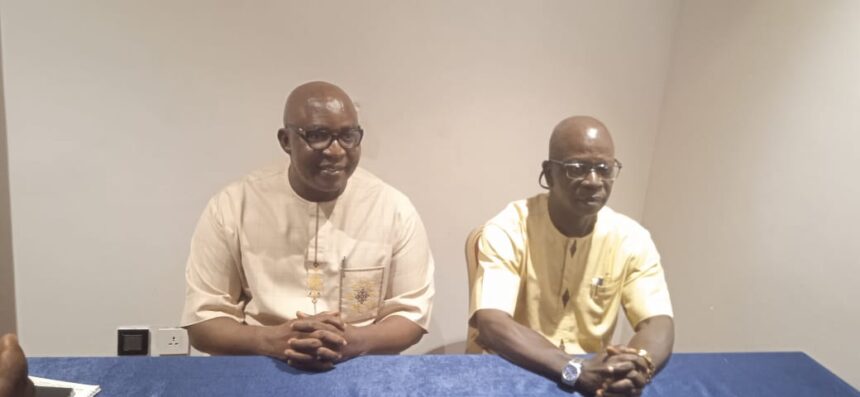
HOMAL President Chief S. O. Alabi, speaking at a press conference in Lagos on Monday, said the ruling protected members from what the association described as unlawful enforcement and financial demands.
The association alleged that some members’ premises were shut during enforcement operations and that businesses were reopened only after payments of up to N2.5 million to NIHOTOUR Training, Research and Consultancy.
It also alleged that a staff member of one of its members sustained an injury that blinded one eye during an enforcement operation. These allegations were part of the association’s account of the dispute.
HOMAL further accused NIHOTOUR of seeking to have its registration certificate withdrawn by the Corporate Affairs Commission and of petitioning the Economic and Financial Crimes Commission over allegations concerning the handling of revenue. The claims were not independently verified.
NIHOTOUR has indicated that it will challenge the latest judgment. In a statement reported on October 15, its Director General, Abisoye Fagade, said the institute would obtain a certified true copy of the decision and consult its legal advisers on the appropriate appellate process.
Fagade said the dispute extended beyond an institutional disagreement, arguing that professional training, recognised qualifications and continuous development were essential to improving workforce competence and the competitiveness of Nigeria’s hospitality industry.
He maintained that professional standards and the protection of legitimate business interests should not be treated as conflicting objectives.
HOMAL acknowledged NIHOTOUR’s right to appeal but said the judgment remained binding unless set aside by a higher court.
The ruling marks a fresh development in the debate over the division of regulatory responsibilities between federal and state authorities in Nigeria’s hospitality industry.