


ACETNews
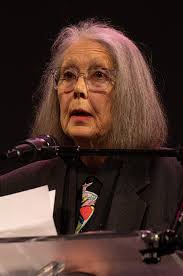
Canadian poet, essayist and classicist Anne Carson has won the 2026 Nobel Prize in Literature, becoming the latest writer to receive one of the world’s most prestigious literary honours.
Carson, 76, was announced as the laureate by the Swedish Academy in Stockholm on Thursday, October 8, 2026.
She was awarded the prize “for her bold and inventive oeuvre that, in playful dialogue with the classical tradition, has created new forms for contemporary literature.
“Anne Carson has, throughout her entire career, combined poetry writing with translation work and teaching at various universities. Almost all her literary production has centred upon the intersection between the philologist’s obsession with words and the poet’s desire for new meaning. She has herself identified the etymology of words as the starting point for all her work, ” The Nobel Prize website reads
The award caps a remarkable literary career spanning poetry, essays, translation and classical scholarship. Known for her intellectually adventurous and genre-defying writing, Carson has built an international reputation by bringing the ancient world into startling and often unconventional conversation with contemporary life.
Born in Toronto in 1950, Carson studied Classics at the University of Toronto, where she earned her bachelor’s, master’s and doctoral degrees. Her fascination with ancient Greek literature began while she was still in high school, when a Latin teacher offered to teach her ancient Greek during lunch breaks. That encounter would profoundly shape her literary and scholarly career.
Carson’s writing has frequently resisted easy categorisation. She has moved fluidly between poetry, prose, criticism, translation, drama and the novel, creating works that blur the conventional boundaries between literary genres. Her best-known books include Eros the Bittersweet, Glass, Irony, and God, Autobiography of Red, The Beauty of the Husband, Men in the Off Hours, Nox, Red Doc> and Float.
Her 1998 work, Autobiography of Red, a novel in verse inspired by fragments of the ancient Greek poet Stesichorus, became one of her signature works and helped introduce her unusual combination of classical mythology, contemporary experience and poetic narrative to a broad readership.
Carson’s engagement with antiquity has also produced celebrated translations and adaptations of Greek works, including Sappho and Euripides. Her work has been praised for combining formidable scholarship with an experimental literary imagination. The Poetry Foundation describes her publishing career as “unclassifiable”, noting the breadth of her work across poetry, essays, translations, libretti, prose criticism and verse novels.
Another landmark in her career is Nox, her 2010 elegiac work about her brother Michael. Presented as an accordion-folded book in a box, Nox combines poetry, translation, photographs, fragments of letters and visual elements, transforming grief and memory into an unusual literary and artistic object.
Over the years, Carson has received numerous major literary honours, including the Lannan Literary Award, Guggenheim Fellowship, MacArthur Fellowship, Griffin Poetry Prize and T.S. Eliot Prize. She is also a Member of the Order of Canada and has received the Princess of Asturias Award for Literature and the PEN/Nabokov Award.
Her Nobel victory places her among a distinguished line of Canadian writers recognised internationally for their contributions to literature. It also marks another significant moment for poetry at the Nobel level, following the recognition of poets such as Louise Glück, who won in 2020.
Carson succeeds Hungarian novelist László Krasznahorkai, who received the 2025 Nobel Prize in Literature for what the Swedish Academy described as a compelling and visionary body of work that, amid apocalyptic terror, reaffirms the power of art.
The 2026 Nobel Prize carries an award of 12 million Swedish kronor. Carson is expected to receive the prize formally at the Nobel ceremony in Stockholm in December.