

By Chinyere Okoroafor
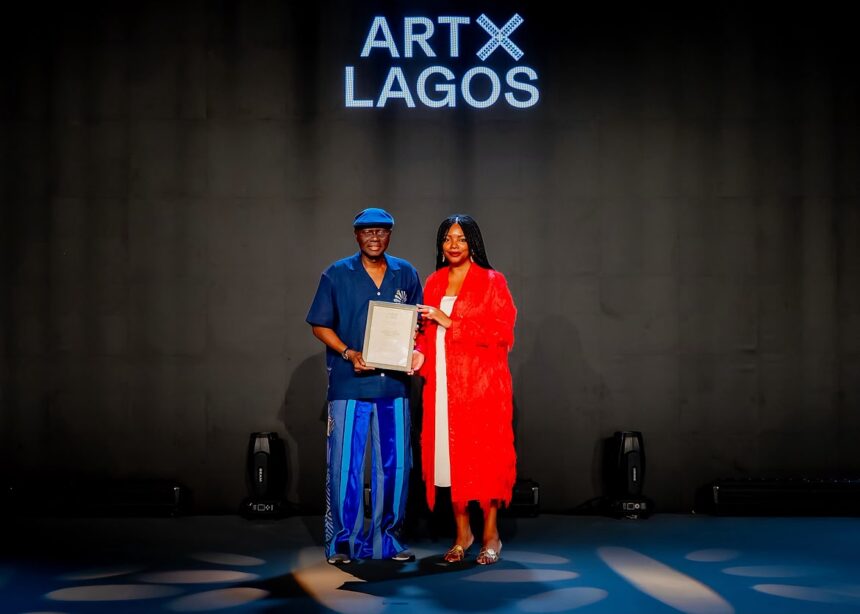
The founder of ART X Lagos, Tokini Peterside-Schwebig, has called for increased investment in art education, museums and cultural institutions to preserve Nigeria’s artistic heritage and strengthen the continent’s creative industries.
She made the call as the 11th edition of ART X Lagos opened with a tribute to pioneering Nigerian potter Ladi Kwali, whose work is being showcased in an exhibition examining her legacy and the generations of women potters who shaped the country’s ceramic traditions.
The exhibition, titled Ladi Kwali: Beyond the Vessel, is one of the highlights of the fair, which runs from November 5 to 8 under the theme, “A New Chapter, A New Decade”.
Peterside-Schwebig said greater knowledge of African history and indigenous artistic traditions was necessary to strengthen cultural identity and help younger generations appreciate the value of locally produced art.
“We are challenging ourselves first of all to unearth our history,” she said.
“As Nigerians, as Africans, we do not know enough about our histories, the places where we come from, the knowledge, the wisdom systems of the past.”
Curated by Dr Jareh Das, the exhibition brings together ceramics and archival materials relating to Kwali, alongside works by other women potters and traditional pottery from northern Nigeria.
The works, drawn from the National Museum, Onikan, Lagos, and private collections, place Kwali’s achievements within the wider traditions of female creativity and technical expertise that sustained pottery-making in Nigeria.
Born in Kwali, in present-day Federal Capital Territory, in 1925, the potter learnt the craft from her aunt and became internationally recognised for her ceramics, which combined traditional techniques with distinctive decorative designs.
Her image appears on Nigeria’s ₦20 note, but Peterside-Schwebig said many young Nigerians remained unfamiliar with her artistic accomplishments.
“We know her as the woman on our 20 Naira note, but young people do not know enough about her or know enough about her achievements,” she said.
She said the exhibition was intended to deepen public understanding of Kwali’s contribution to Nigerian art while recognising the women and communities whose knowledge informed her practice.
Ceramics by Kande Ushafa and Asibi Ido, alongside traditional pottery associated with Gbari, Nupe and Bida communities, further explore the cultural traditions surrounding Kwali’s work. Sponsored by Zenith Bank, the exhibition also challenges the distinction often drawn between indigenous crafts and fine art by presenting pottery as a sophisticated practice rooted in technical knowledge, experimentation and cultural continuity.
Peterside-Schwebig said the exhibition reflected ART X Lagos’s broader ambition to promote African artistic excellence and encourage people to value local creativity without depending on international validation.
She said the fair, founded in 2016, had helped create opportunities for African artists to build international careers while developing the local market for their work.
According to her, one of the platform’s major achievements has been challenging the perception that Nigerian artists must leave the continent to achieve global recognition.
“Before we came on the scene in 2016, there was a belief amongst young artists on the continent, especially in Nigeria, that to succeed and have globally resonant careers, they needed to leave this continent, that the opportunities were not here for them,” she said.
She added that the growth of African collectors buying works by African artists was another important development in the sector.
Beyond the commercial art market, Peterside-Schwebig called for more museums, research centres, art festivals and educational programmes to support the industry’s long-term growth.
“What I want to see are more types of institutions,” she said.
“I want to see art education in Nigeria return to the heights at which it was in the 50s, 60s, 70s. I want to see more international standard museums. I want to see more spaces for research, for learning. I want to see more art festivals be created.”
She said sustained investment in cultural infrastructure would create opportunities for artists, preserve indigenous knowledge and expose more Nigerians to the arts.
As part of its educational initiatives, ART X Lagos organised visits for schoolchildren, with Peterside-Schwebig saying nearly 800 pupils from schools and communities across Lagos visited the fair this year.
The platform also runs workshops, mentoring programmes and the ART X Development Forum, which connects emerging artists and curators with established practitioners and international cultural institutions.
She said such initiatives were intended to make the arts more accessible and encourage young people to explore careers in the creative sector.
The fair’s Art Across Borders initiative also promotes cultural exchange among African countries, featuring artists and organisations associated with Kenya, Zimbabwe, Morocco, Angola and Nigeria.
Other programmes include ART X Cinema, ART X Talks and ART X Live!, which extend the fair’s activities to film, public discussions and live performances.
Peterside-Schwebig said corporate organisations had played a major role in supporting the platform, while engagements with the FederalGovernment and Lagos State Government had helped advance discussions on the creative industries.
Lagos State Governor Babajide Sanwo-Olu has also praised the fair’s contribution to cultural tourism, youth development and the state’s creative economy.
As ART X Lagos enters its second decade, Peterside-Schwebig said the priority was to build stronger institutions and deepen public appreciation of African art, history and cultural knowledge.